

Strengthening Standards to Improve Transparency in Vietnam’s Carbon Market
diendandoanhnghiep.vn To ensure the effective operation of Vietnam’s carbon market, it is essential to address remaining regulatory gaps, including emissions...
See Morebaomoi.com
Four years ago, the Women’s Union of An Giang Province, in collaboration with a private company, distributed 152,000 free water purifiers to households across 54 communes. This initiative has since expanded to benefit women across the Mekong Delta.
What few realize is that these compact water purifiers—sitting quietly in the kitchens of rural families in southern Vietnam—are doing more than providing clean drinking water. They are opening the door for Vietnam to participate in the international voluntary carbon market, a space valued in the tens of millions of dollars. In a world where the green economy is fast becoming the new global standard, the Safe Drinking Water Project (SDWP), modest as it may seem, has emerged as a rare success story of how sustainable development goals can be commercialized.
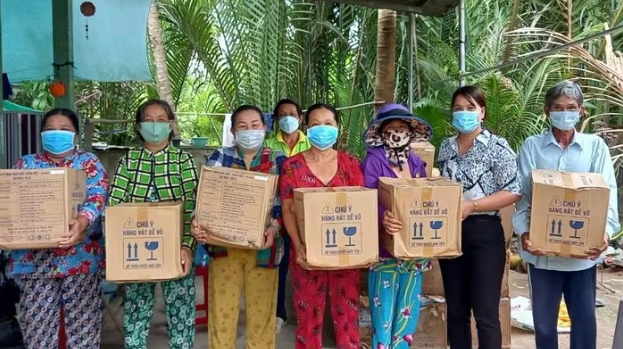
Gone are the days when families had to boil water with firewood—a habit passed down for generations. Today, in 13 provinces across the Mekong Delta, clean drinking water is just a filter away. Since its launch, the Sustainable Investment Promotion and Development Company (SIPCO) has distributed 900,000 free water purifiers to over 883,000 households in partnership with local unions and NGOs.
The first and most immediate benefit is health: no more exposure to untreated water, toxic fumes from burning firewood, or hours spent boiling water each day.
The second, often overlooked but equally vital, is the time and cost saved. Between 2021 and 2024, the project helped communities save over 1 million hours of what the international community calls “unpaid labor”—mostly performed by women and children—along with hundreds of thousands of dong per household in fuel expenses.
And the third benefit, increasingly recognized, is economic: these purifiers generate carbon credits by reducing greenhouse gas emissions—making the project both environmentally and financially valuable.
The project has completed its documentation and is now in a verified stage with VERRA, a U.S.-based nonprofit organization that sets and manages global standards for sustainable development and emissions reductions. Think of the carbon market as Wall Street for climate action—VERRA acts like a stock exchange, ensuring transparency and credibility for every “green share.”
This project is being verified under VERRA’s Sustainable Development Verified Impact Standard (SD VISta), which not only certifies carbon reductions but also tracks broader development impacts like health, education, and gender equality.
According to initial monitoring reports, the project has prevented the burning of over 2.3 million tons of firewood—avoiding nearly 3 million tons of CO₂ emissions. Over its full lifecycle (2021–2031), the project is expected to reduce emissions by 1.2 million tons of CO₂ per year.
With current carbon credit prices ranging from USD 5 to 20 per ton, the project could generate between USD 15 and 60 million in revenue during its initial phase alone.
Notably, even before official verification, buyers have shown strong interest. Vitol (China) Energy, a subsidiary of one of the world’s leading energy firms, has already signed a carbon credit purchase agreement with SIPCO—proof that if developed properly, Vietnam’s carbon credits can secure a place on the global market.
diendandoanhnghiep.vn To ensure the effective operation of Vietnam’s carbon market, it is essential to address remaining regulatory gaps, including emissions...
See More
verra.org WASHINGTON – Jan. 30, 2026 | Verra has applied the first labels confirming CORSIA eligibility to 4,776,194 credits issued by...
See More
The voluntary carbon market (VCM) in 2025 is often described as being in retreat. Trading volumes are down from the...
See MoreWe are looking forward to start a project with you.