

Strengthening Standards to Improve Transparency in Vietnam’s Carbon Market
diendandoanhnghiep.vn To ensure the effective operation of Vietnam’s carbon market, it is essential to address remaining regulatory gaps, including emissions...
See MoreThe voluntary carbon market (VCM) in 2025 is often described as being in retreat. Trading volumes are down from the 2023 peak, prices have softened in parts of the market, and scrutiny around “junk credits” remains intense. Yet this headline narrative misses a more important reality: demand has not disappeared—it has become selective.
Retirement activity has remained broadly stable, while a clear quality tier has emerged. The market is no longer shrinking uniformly; it is bifurcating.

While transaction volumes declined in 2024–2025, prices fell only modestly and retirement levels held steady. This divergence points to a structural shift rather than a collapse. Buyers are purchasing fewer credits, but higher-quality ones, often at a significant premium.
Credits aligned with the Integrity Council for the Voluntary Carbon Market (ICVCM) and its Core Carbon Principles (CCP) increasingly define what is considered defensible. Credits outside this emerging quality threshold face growing reputational and regulatory risk.
Buyer behavior in 2025 reveals clear sectoral patterns. Large purchasers remain concentrated in oil & gas and aviation, sectors facing pressure from scope 3 emissions, litigation risk, and upcoming compliance obligations such as CORSIA.
Forestry credits continue to dominate large-volume portfolios, despite years of criticism of REDD+ methodologies. This apparent contradiction is driven by availability and affordability: high-quality removals (e.g. DAC, biochar, enhanced weathering) remain scarce and expensive, making them unsuitable for buyers with large volume needs.
At the same time, several historically active buyers—including Delta Air Lines, Telstra, and AUDI AG—have effectively exited the market. These pauses reflect strategic reassessments, not short-term budget constraints, often following legal or reputational challenges linked to earlier offset claims.
Despite growing demand for high-integrity credits, supply remains extremely limited:
CCP-labelled projects: ~1.7% of global supply
CORSIA-eligible projects: ~2%
Paris Agreement Article 6 authorized projects: <0.5%
This mismatch between demand and supply is one of the defining tensions of the 2025 market. Quality-tier projects are geographically concentrated—particularly in the United States and parts of Latin America—while high-volume regions in Southeast Asia and Africa lag in certification, increasing geographic concentration risk for buyers.
High-profile buyers face disproportionate scrutiny. Shell, the largest historical buyer of voluntary credits, illustrates the paradox of scale: large purchases have not reduced legal exposure and may instead amplify it. Similarly, Delta’s abrupt halt in credit retirements followed legal action alleging greenwashing linked to its former “carbon-neutral” claims.
The lesson is not that carbon credits are ineffective, but that portfolio quality, vintage, and claim framing are now critical risk variables.
The regulatory environment has tightened significantly:
The European Union Green Claims Directive restricts carbon-neutrality claims based solely on offsets.
CCP certification is increasingly treated as a minimum standard, not a differentiator.
Paris Agreement Article 6 authorization adds legitimacy through corresponding adjustments, but supply remains niche and insufficient for large-scale use.
As a result, corporate buyers are asking harder questions about claim defensibility, documentation, and exposure if projects are challenged.
Risk in 2025 is no longer just about price—it is multidimensional:
Lower risk: CCP-labelled credits, CORSIA-eligible projects, Article 6 authorized credits
Higher risk: Uncertified REDD+, renewable energy credits, older vintages
Structural risks: Vintage age, geographic concentration, and weak documentation
In an environment of heightened accountability, the ability to justify why a credit was purchased matters as much as the credit itself.
The voluntary carbon market in 2025 is neither dead nor dying. Thousands of buyers remain active, retirement volumes continue, and new entrants—particularly in aviation—are preparing for compliance-driven demand.
However, the market is rapidly splitting into two tiers. One is defined by quality, defensibility, and rising premiums. The other faces declining demand and increasing scrutiny.
For corporate buyers, the strategic question is no longer whether to engage with carbon markets—but whether their portfolio sits on the right side of this divide. Doing nothing is now a choice, and increasingly, a risky one.

diendandoanhnghiep.vn To ensure the effective operation of Vietnam’s carbon market, it is essential to address remaining regulatory gaps, including emissions...
See More
verra.org WASHINGTON – Jan. 30, 2026 | Verra has applied the first labels confirming CORSIA eligibility to 4,776,194 credits issued by...
See More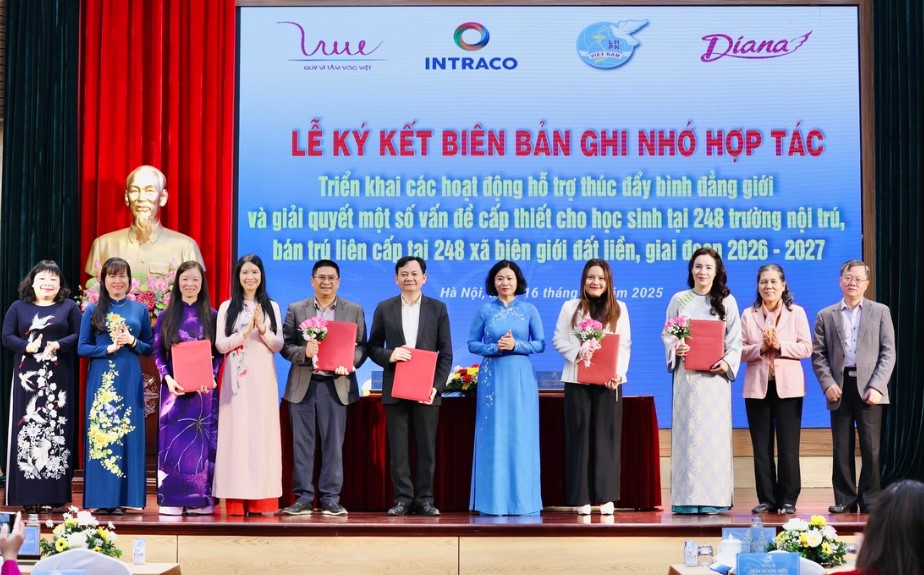
phunuvietnam.vn On December 15, the Vietnam Women’s Union (VWU) signed a Memorandum of Understanding (MoU) with INTRACO, the For Vietnamese...
See MoreWe are looking forward to start a project with you.