

Verra Applies First CORSIA Labels to Credits
verra.org WASHINGTON – Jan. 30, 2026 | Verra has applied the first labels confirming CORSIA eligibility to 4,776,194 credits issued by...
See Morediendandoanhnghiep.vn
To ensure the effective operation of Vietnam’s carbon market, it is essential to address remaining regulatory gaps, including emissions allowance allocation, registry system design, monitoring procedures, and enforcement mechanisms.
This was emphasized by Mr. Hoang Anh Dung, CEO of INTRACO, in an interview with Business Forum. According to Mr. Dung, these elements form the “operating system” required to transform Vietnam’s Net Zero 2050 commitment from a political pledge into a concrete economic strategy.

Mr. Hoang Anh Dung, CEO of INTRACO
The Vietnamese Government recently issued Decree No. 29/2026/ND-CP (dated January 19, 2026), which regulates activities related to the domestic carbon exchange. The decree covers procedures for registration, domestic identification codes, ownership transfer, custody, trading, and settlement of greenhouse gas emission allowances, as well as the eligibility conditions for carbon credits that enterprises may trade in accordance with the law.
According to Mr. Dung, establishing a legal framework for piloting the carbon exchange from 2026 carries significant implications for both the business community and Vietnam’s pathway toward Net Zero. He highlighted three strategic impacts:
Creating a new financial flow: Rather than viewing emissions reduction as a cost, businesses can now convert their emission reduction results into tradable and liquid assets, including emission allowances and carbon credits.
Financial instruments such as emissions reduction-linked bonds, which INTRACO previously implemented with the World Bank, could leverage this infrastructure to securitize future carbon credit revenues, allowing companies to access more affordable financing.
Enhancing international competitiveness: As global carbon-related trade mechanisms such as CBAM and CORSIA become increasingly important, the operation of a domestic carbon exchange enables Vietnamese companies to prepare for compliance requirements and optimize costs.
This will help Vietnam achieve its Nationally Determined Contributions (NDC) while protecting the competitiveness of Vietnamese exports in international markets.
Increasing transparency in the Net Zero roadmap: The decree establishes a national registry system and centralized trading mechanism, allowing both the government and businesses to track emissions accurately. This infrastructure acts as an “operating system” that translates Vietnam’s Net Zero ambition into measurable economic outcomes.
Mr. Dung emphasized that the success of the pilot phase through 2028 will not depend on transaction volumes, but on three critical pillars:
Transparent and reliable infrastructure (MRV & Registry): A synchronized national registry system linked with the carbon exchange is essential. Each carbon credit or emissions allowance must be assigned a unique identification number to prevent double counting and maintain investor confidence.
If the technical infrastructure of the Hanoi Stock Exchange (HNX) and the Vietnam Securities Depository and Clearing Corporation (VSDC) lacks transparency or compatibility, the market could lose credibility from the outset.
Strengthening corporate awareness and governance capacity: Many Vietnamese companies are still unfamiliar with emissions accounting, offset mechanisms, and trading procedures.
The pilot phase should therefore function as a “hands-on training period” for businesses. The government’s decision to waive service fees until 2028 provides an important incentive, but companies must also proactively develop internal expertise in green transition.
Ensuring high-quality market assets: For Vietnam’s carbon exchange to integrate with global markets, traded assets—particularly Article 6 credits under the Paris Agreement—must meet strict environmental and social standards.
Preventing low-quality projects or greenwashing practices from entering the market is critical to maintaining credibility.
From the perspective of a company actively developing complex carbon finance structures and contributing to policy discussions, Mr. Dung noted that Decree 29 and Decision 232/QD-TTg (issued January 24, 2025) have established a relatively solid legal foundation.
However, for the carbon market to function smoothly from 2026, four key regulatory gaps must be addressed:
Although Decision 232 outlines the allocation of allowances for large emitters during the pilot phase until 2028, businesses require detailed sector-specific default emission factors to calculate allocations based on technological efficiency rather than historical emissions.
Regulations on allowance auctions—including auction methods, floor prices, and timelines—should also be drafted early to help businesses anticipate long-term carbon costs beyond 2029.
The national registry is the “heart” of the carbon market. Clear protocols must be established for data connectivity between the national registry (managed by the Ministry of Natural Resources and Environment) and the securities depository system. Without real-time synchronization, the risk of double counting could undermine market credibility.
Guidelines are also needed for converting international credits—such as those under Article 6 of the Paris Agreement or CORSIA—into domestic registry identifiers eligible for trading.
While Decree 29 introduces the principle of instant settlement for each transaction, the participation requirements for investors—such as capital thresholds, technical expertise, and margin requirements—must be clearly defined to attract international investment.
Additionally, order-matching mechanisms and market makers should be designed early to ensure sufficient liquidity during the initial stage of market operation.
To prevent greenwashing, Vietnam must issue detailed MRV technical standards for different project types, including forestry projects (ARR, IFM) and renewable energy.
If emissions data are inaccurate, the resulting credits will lose credibility in international markets. At the same time, clear regulations on market manipulation and penalties are essential to protect legitimate investors.
Finally, tax and fee policies must also be clarified. Determining whether carbon credits are classified as commodities or financial assets will directly influence the application of value-added tax (VAT) and corporate income tax, an issue of particular importance to investors.

verra.org WASHINGTON – Jan. 30, 2026 | Verra has applied the first labels confirming CORSIA eligibility to 4,776,194 credits issued by...
See More
The voluntary carbon market (VCM) in 2025 is often described as being in retreat. Trading volumes are down from the...
See More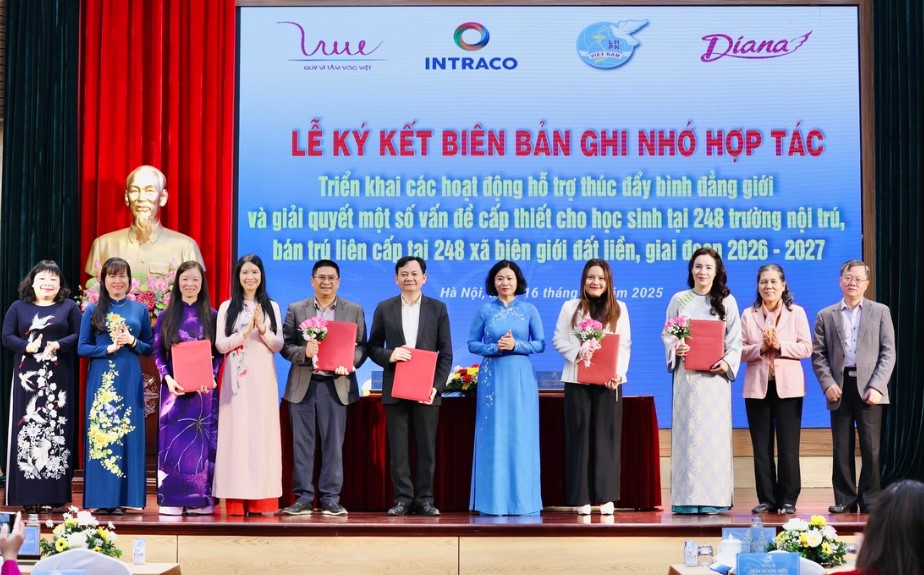
phunuvietnam.vn On December 15, the Vietnam Women’s Union (VWU) signed a Memorandum of Understanding (MoU) with INTRACO, the For Vietnamese...
See MoreWe are looking forward to start a project with you.